
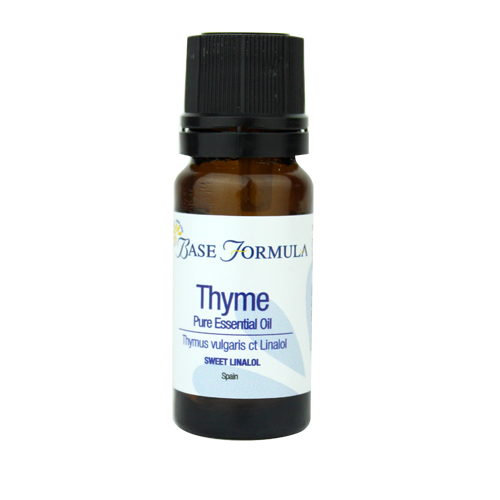
Thyme (Sweet Linalol) Essential Oil
- Product Code: EO-T04
- Availability: In Stock
-
£7.74
- Ex Tax: £6.45
Available Options
Sweet Thyme essential oil (Thymus vulgaris ct. linalol) has a much warmer, sweeter aroma than White Thyme (Thymus vulgaris ct thymol), and quite a different chemical make-up - containing far less thymol and considerably more linalol. It is the most gentle and non-toxic Thyme oil and is considered safe for use on the skin and for children.
- Species: Thymus vulgaris ct Linalol
- Plant family: Lamiaceae
- Origin: Spain
- Note: Middle
- Extraction method: Steam distilled
|
Safety Note:
|
Avoid during pregnancy.
|
|
Skin:
|
Sweet Thyme essential oil has gentle antiseptic properties which can be beneficial in the treatment of acne and other inflamed skin conditions such as dermatitis and eczema.
|
|
Mind:
|
Sweet Thyme is an excellent neurotonic and can be useful in treating stress, depression and nervous exhaustion. Also reputed to be useful in blends for those suffering with ME, chronic fatigue and multiple sclerosis.
|
|
Body:
|
Sweet Thyme oil is an effective immunostimulant. Can also be useful for muscular aches and pains and respiratory problems such as coughs and asthma.
|
|
Blends well with:
|
Most citruses and herbs, Geranium, Roman Chamomile, Sandalwood
|
Allergens Listing:
Citral, Geraniol, Limonene, Linalool
Immunity Stimulant
- Diffuse 3 drops Sweet Orange, 2 drops Palmarosa and 1 drop Thyme to stimulate and balance the immune system.
- If you’re suffering with a bug, try a steam inhalation to boost your immunity. Mix 3 drops Eucalyptus, 2 drops Sweet Orange and 1 drop Thyme in a bowl of boiling water, close your eyes, place a towel over your head and inhale the steam for 10 minutes.
Respiratory Aid
- To improve respiration, try a steam inhalation to help clear your airways. Add 3 drops Eucalyptus, 2 drops Palmarosa and 1 drop Thyme to a bowl of boiling water and follow the directions above.
- Thyme is a great oil to help with snoring! Add 3 drops Lavender and 2 drops Thyme to a cotton pad, and place it next to your bed to let the oils subtly take effect.
Nervous System Tonic
- For an over-worked nervous system, or for those suffering with Chronic Fatigue Syndrome, or Multiple Sclerosis, try a soothing massage blend to relax and calm the nervous system. Blend 3 drops Chamomile, 2 drops Bergamot and 1 drop Sweet Thyme with 15ml Grapeseed oil, and apply to the body in a direction towards the heart.
- To soothe the nervous system and create a relaxing environment diffuse 3 drops Sandalwood, 2 drops Sweet Orange and 2 drops Thyme for short bursts throughout the day.
- If you’re feeling your nerves on edge, enjoy a relaxing bath with 4 drops Geranium, 2 drops Sandalwood and 1 drop Thyme mixed in half a cup of full fat milk or 15ml of Bath Oil. Shut doors and windows, pour into the running water, then lie back and inhale the soothing aroma.
Muscular Aid
- If your muscles are suffering, mix a soothing massage oil with 3 drops Lavender, 2 drops Thyme, 1 drop Rosemary and 15ml Grapeseed oil. Apply to the body in a direction towards the heart.
Skin Antiseptic
- For any wounds that are struggling to heal, mix 3 drops Thyme and 2 drops Chamomile into 15ml of Aloe Vera Gel and apply to the affected area.
Related Products
Eucalyptus (Smithii) Essential Oil
£2.10 Ex Tax: £1.75
Eucalyptus (Radiata) Essential Oil
£3.00 Ex Tax: £2.50
Lavandin Super Essential Oil
£2.88 Ex Tax: £2.40
Essential Oil Cap Labels
Cap Labels for the tops of your essential oils. Perfect for keeping them organised in your essent
£3.49 Ex Tax: £2.91


